 0207 608 5500





Search ideas, news and case studies
Blog Categories
Rebecca Waclawyj: Building Brighter Futures Through Mediation
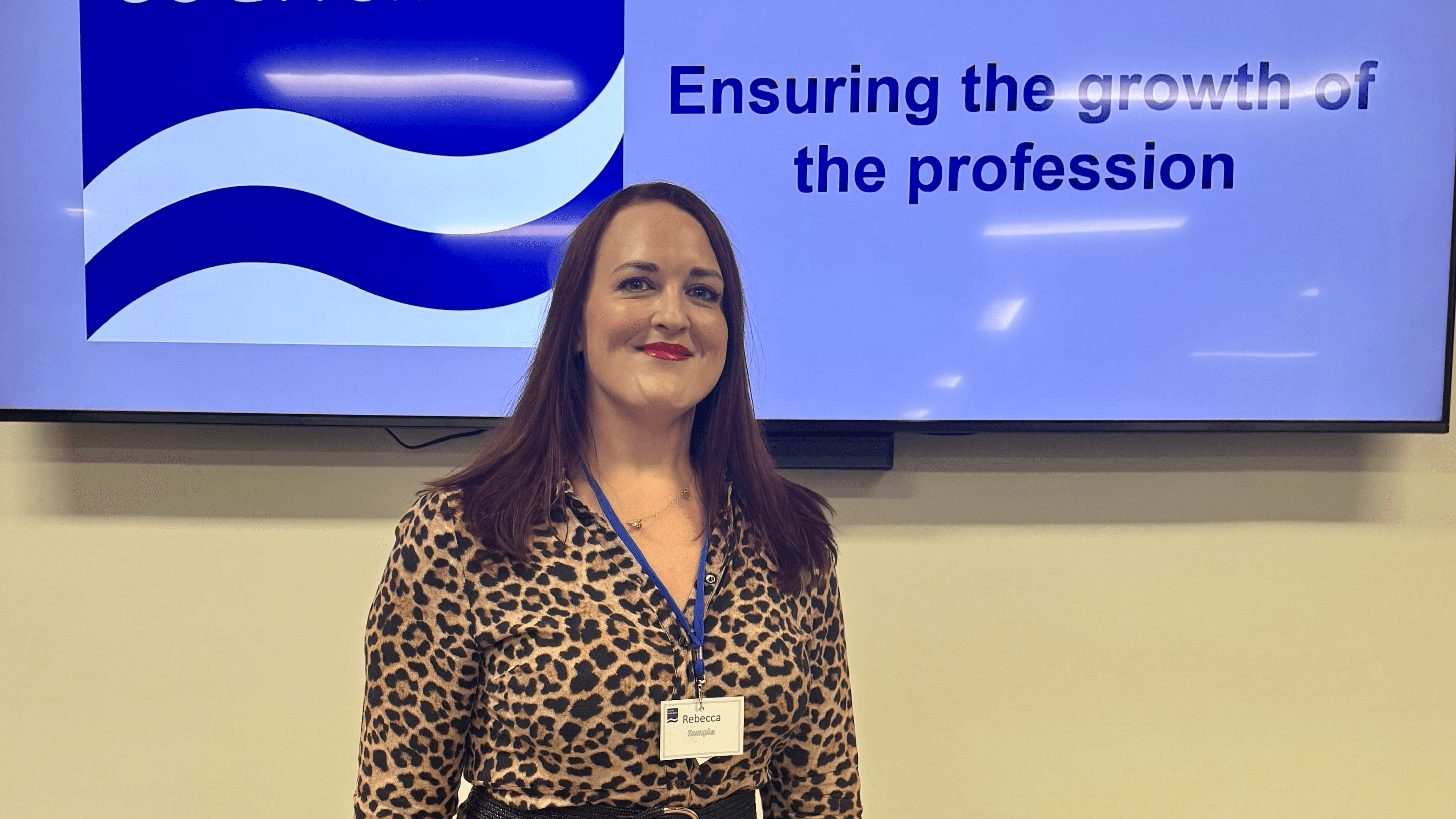

Some businesses begin with a market gap, others begin with a moment of personal reckoning.
For Rebecca Waclawyj, founder of Brighter Future Mediation, it was both.
Her business sits in one of the most emotionally charged spaces a founder can choose to work in: conflict. Through Brighter Future Mediation, Rebecca supports people navigating family and workplace disputes, offering an alternative to the cost, delay and emotional strain of court. The business is built around accessibility, inclusion and a trauma-informed approach, with a clear mission to help people find a better way through some of the hardest moments of their lives.
That mission is deeply personal. When Rebecca found herself navigating the family court system firsthand, the gap between what people need and what the system provides became impossible to ignore.
Brighter Future Mediation was built in response to that experience, offering a more accessible and human approach to conflict resolution.
Starting from lived experience
Rebecca has always had an entrepreneurial mindset, but just as important was doing work that meant something.
Her career has been shaped by roles supporting individuals through complex systems, including work in prisons, the justice system and specialist family court services. The thread running through all of it was a desire to help people, particularly in spaces where they often feel powerless.
That experience gave her a clear view of where systems fall short, but it was not until she found herself self-representing in family court that things shifted.
Despite her background, the process felt confusing, inconsistent and hard to navigate.
“It was everything about my personal and lived experience that led to me starting Brighter Future Mediation,” she says.
There was another layer too. Rebecca had trained as a mediator back in 2017, but the accreditation process was so expensive that she could not continue. Then, during a period of poor health and while in hospital, she found herself asking a direct question: what do I actually want to do with my life?
The answer came quickly. She registered the business from her hospital bed and began building it alongside her full-time role as a project manager.
Building through uncertainty
There is a version of entrepreneurship that gets told neatly, where the founder has a plan, raises money, scales fast and speaks with calm certainty about the road ahead. Rebecca’s story is more honest than that. It is full of pressure, improvisation and the reality of building something from scratch while managing a full life outside of work.
“The biggest challenge has been being a solo founder,” she says.
That honesty matters because solo founding is often romanticised. In reality, it can be lonely and relentless. Rebecca speaks openly about what it takes to hold the vision and keep going, often without the support many assume founders have.
She started Brighter Future Mediation with very limited resources, building it as a solo parent from scratch.
That shaped every decision and highlighted a wider issue. Much of the support available is tied to trading history, capital or the ability to work unpaid for long periods. For those starting with very little, those barriers are real.
Like many founders, she was also learning everything in real time. From marketing and tech to hiring and operations.
There were setbacks. Long hours, hires that did not work out, and money spent where it should not have been. But rather than slow her down, those moments sharpened her approach and strengthened her commitment.
Gaining traction and building momentum
Despite the challenges, the business began to gain real momentum.
The traction Brighter Future Mediation generated in its first year was significant; revenue grew by 1,014% from the first quarter to the fourth. That momentum introduced Rebecca to the Seed Enterprise Investment Scheme (SEIS), and within seven weeks she had closed her first investment round.
Building on that progress, Rebecca is now developing a tech-enabled platform designed to bring together mediators, clients and allied professionals in one place. The aim is to improve the client experience, reduce administrative burden and better demonstrate impact through data, monitoring and evaluation.
To support this next phase, Brighter Future Mediation opened its second SEIS round on International Women’s Day, 8 March 2026.
Finding reward in real change
In previous roles, Rebecca often felt limited in how much change she could create. Building her own business has shifted that.
If something is not working, she can change it. If clients give feedback, she can act on it quickly. The ability to move, test and improve has become one of the most rewarding parts.
Community has also played an important role in that growth. She has been able to shape the business around her values, bringing in others who share the same mindset and through mentoring and accelerator programmes, she found support, practical guidance and a sense of direction at key stages of the business.
“Feeling connected to a community is really important,” she says. “If you don’t have one, you better build one.”
That idea runs through her journey. While entrepreneurship is often seen as independent, her experience shows how important it is to stay connected, especially in the early stages.
Learning the business behind the mission
Ask Rebecca what she wishes she had known at the start, and the answer is immediate: the hidden architecture of a business.
It was not just about delivering a service, but understanding everything behind it. Finance, marketing, operations, systems. Roles that all need to function, whether carried by one person or a full team.
“I wish I knew the roles that are necessary for a successful business,” she says.
One of the biggest lessons has been the importance of building for scale, even early on. Rebecca repeats advice she heard and only fully understood later: set your business up so that you do not have to exist at the centre of every process. In other words, build something that can function, grow and serve people without relying on one person.
That shift is already influencing how she approaches systems and structure. From client management to internal processes, the focus is on creating something that works consistently and can scale over time. It is not an area she came into with experience, but she has approached it with a willingness to learn and adapt.
She also speaks with increasing clarity about boundaries, expectations and decision-making. Early-stage founders often feel pressure to keep everything moving and everyone happy. Over time, Rebecca has learned that being direct is not unkind, it is necessary. Especially when time, energy and resources are limited.
Rethinking mediation, access and who gets to lead
Rebecca’s work sits within a sector shaped by long-standing structures. In family law, those structures can influence how conflict is handled and who is able to take part in resolving it.
For Rebecca, the focus goes beyond how mediation is practised. It is about who has access to it as a profession. The route into becoming an accredited mediator is expensive, time-consuming and often out of reach for those without financial backing or flexibility. That shapes who enters the field, and who is able to stay.
For solo parents, women and those without a traditional route into the sector, the barriers can be steep, something Rebecca knows first-hand.
The need for a more accessible approach is clear. Recent findings from the Public Accounts Committee highlight a system under significant strain, with thousands of children caught in lengthy family court proceedings. The impact reaches far beyond the courtroom, affecting families, work and wider support systems.
Mediation, when delivered well and made more accessible, offers part of that alternative. It is the space Brighter Future Mediation is focused on.
Brighter Future Mediation aims to offer a service while creating a more accessible pathway into the profession. This includes supporting mediators through accreditation, and creating more flexible opportunities. Rebecca is already putting this into practice, building a UK-wide team of FMC and CMC registered mediators whose backgrounds better reflect the clients they serve.
It is a values-led approach, but it is also commercially intelligent. The business has found a gap between traditional law firms and charities: a middle ground that is affordable, accessible and designed around a better client experience. Brighter Future Mediation removes admin and client management from mediators so they can focus on what they do best, while clients get a more consistent, streamlined service.
What still holds women back
In Rebecca’s view, structural barriers still play a significant role in shaping who is able to start and sustain a business, particularly for women with caring responsibilities.
This reflects a wider pattern. Female founders remain significantly under-resourced despite their economic potential, with just 2% of venture capital going to all-female founding teams (source: https://therisereport.co.uk/). For many women, the challenge is accessing the support needed to sustain and grow a business.
These challenges rarely exist in isolation. For founders navigating overlapping factors such as neurodivergence, socioeconomic background and caring responsibilities, the path becomes even harder to navigate. Rebecca’s own journey reflects this. As a neurodivergent founder from a lower-income background, she has experienced how these layers can combine to make already complex systems feel even more difficult to access.
Her own experience of trying to access support while building a business exposed a maze of contradictions, delays and stress. She describes repeated appeals, childcare support disputes and the exhausting effort required to prove work that was already being done.
“The welfare system in this country indirectly discriminates against women,” she says.
Alongside this, childcare and time remain significant challenges. Access to safe, reliable childcare, and the time it creates, can shape what is possible. Time to think, to work, and to build. For women with sole care responsibilities, there is often no backstop and little flexibility.
That reality changes what entrepreneurship looks like. Progress can be slower, less predictable and more difficult to sustain, even when the ambition is there. Rebecca’s reflections highlight a wider issue. The challenge is not a lack of drive, but the environment women are expected to build within, and the systemic barriers that still remain.
Advice from someone in the thick of it
Rebecca’s advice to women thinking about starting a business is practical, generous and refreshingly free from perfectionism.
Start by exposing yourself to the world you want to enter. Listen to podcasts, explore founder communities, attend events and learn the language of business. She encourages women not to wait until they have the perfect idea, perfect plan or perfect timing. None of those things are likely to arrive all at once.
Rebecca did not begin with certainty. She began with purpose, curiosity and action. Step by step, connection by connection, she built both the business and the confidence to keep growing it.
Her story does not suggest that entrepreneurship becomes easy. It suggests that it becomes more navigable when you stop expecting yourself to know everything at the start.
A founder journey in one word
If Rebecca had to sum up her founder journey in one word, it would be this: rollercoaster.
It fits. Highs and lows, progress and setbacks, all happening at once.
Brighter Future Mediation exists because Rebecca wanted to build something better, for clients, for mediators and for a system that too often leaves people overwhelmed. She has done that while carrying the pressures of solo founding, single parenthood and startup life with remarkable honesty and grit.
Her journey is a reminder that some of the most impactful businesses come from lived experience. From understanding the problem first-hand and choosing to build something better because of it.
As Rebecca puts it, “If you keep making those steps I don’t think you can go in the wrong direction.”
To find out more about Brighter Future Mediation or follow their journey, visit their website or connect with them on Instagram.
To explore opportunities to support Brighter Future Mediation’s growth through SEIS investment, you can contact Rebecca directly at rebecca@brighterfuturemediation.co.uk.
Inspired by Rebecca’s journey?
Whether you’re ready to start your business or just exploring ideas, Companies MadeSimple is here to support your next step.
