0207 608 5500





Search ideas, news and case studies
Blog Categories
Getting to Know Your Company's Dates


Running a limited company comes with a handful of key dates worth actually understanding, not just glancing past on your dashboard. Knowing what each one means, and when it's coming up, keeps you ahead of your filing obligations rather than reacting to them at the last minute.
Key Takeaways
- Your Incorporation Date is effectively your company's birthday, and it anchors several other dates that follow from it.
- Your Accounting Reference Date isn't the same as your incorporation date, it's rounded to the last day of that month.
- "Next Accounts Due" and your Confirmation Statement due date are the two deadlines most worth keeping an eye on, since missing either brings real penalties.
- If a date field shows as empty, it usually means that filing hasn't happened yet, not that something's gone wrong.
- If your company's with us, all of these dates are visible in one place through your account dashboard.
How Do I Find My Company's Dates?
If your company's with us, here's where to look.
Head to the homepage and select "Login" in the top right.

From your dashboard, select "My Companies" to see every business you've formed.

Select the company you want to check, which opens your Company Admin Panel.
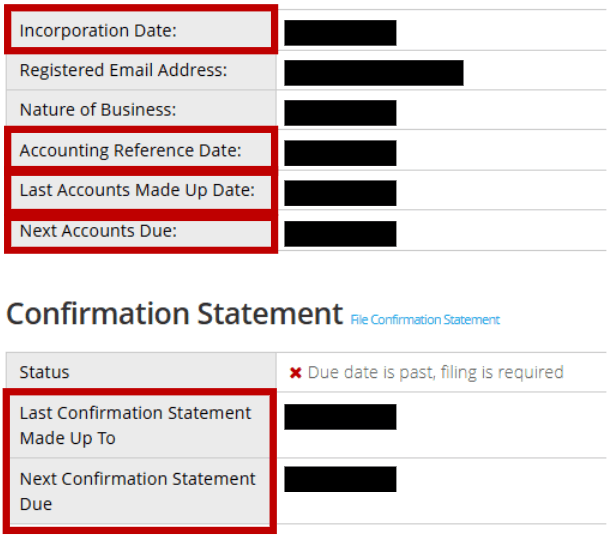
Under "Company Details," you'll find your Incorporation Date, Accounting Reference Date, Last Accounts Made Up Date, Next Accounts Due, and your Confirmation Statement dates.
What Do These Dates Actually Mean?
Incorporation Date. The day your company was officially formed with Companies House, effectively its birthday.
Accounting Reference Date. The last day of the month you incorporated in, not the exact anniversary of incorporation itself. This is the date your annual accounts are measured up to each year.
Last Accounts Made Up Date. The end of the period your most recently filed accounts cover. If this field is empty, your company hasn't filed any annual accounts yet.
Next Accounts Due. Your upcoming deadline to file accounts. Worth watching closely as it approaches, since missing it brings an automatic financial penalty.
Confirmation Statement dates. These show when your company's details were last confirmed as accurate, and when your next Confirmation Statement is due. If this field is empty, your company hasn't filed one yet. Our guide to PSCs and the Confirmation Statement covers this filing in full, including current fees.
Your Accounting Reference Date isn't your incorporation date itself, it's rounded to the last day of that month. Incorporate on 14 March, and your Accounting Reference Date becomes 31 March, not 14 March. This one detail shapes when your annual accounts are actually due, so it's worth checking rather than assuming it matches your company's exact "birthday."
Why Does Keeping Track of These Actually Matter?
Each of these dates ties to a real obligation, and missing one brings consequences: automatic penalties for late accounts, and the risk of being struck off for a missed Confirmation Statement. Knowing where you stand against each one means you're acting ahead of a deadline rather than scrambling once it's already passed.
You can also learn more about our platform and how to use it to manage your companies here.
FAQs
What is my company's Accounting Reference Date?
The last day of the month your company was incorporated in, not the exact incorporation date itself. It's the date your annual accounts are measured up to.
What does it mean if my "Last Accounts Made Up Date" is empty?
It means your company hasn't filed any annual accounts yet, which is normal for a newly formed company.
Where can I check all my company's key dates in one place?
If your company's with us, they're all visible in your account dashboard, under "Company Details" in your Company Admin Panel.
What happens if I miss my "Next Accounts Due" date?
An automatic financial penalty applies, increasing the longer the accounts remain unfiled.
This article is for general information only and does not constitute legal advice. Companies House requirements can change, so it's worth checking current guidance on GOV.UK or Companies House before relying on the details above.