0207 608 5500


Search ideas, news and case studies
Blog Categories
How to build a business alongside a full-time job: 7 lessons from physio founder Ruby Ditende
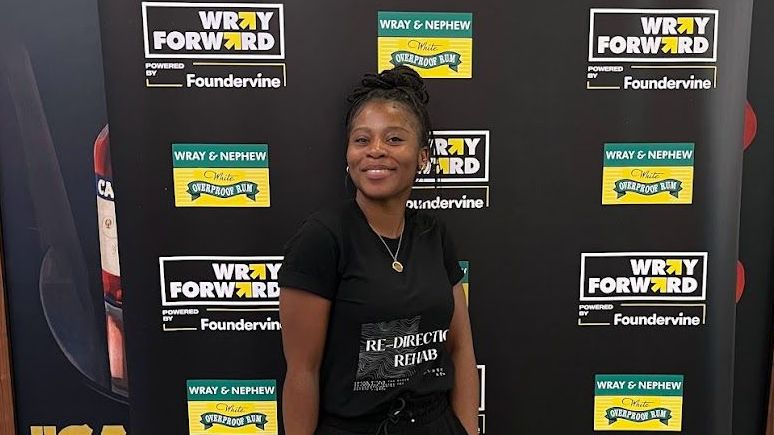

Most of Ruby Ditende's working week belongs to someone else. She is a full-time physiotherapist, and whatever is left over, evenings, weekends, the odd day saved for admin, goes into the business she is building on the side.
That business is Re-Direction Rehab (RDR), and its premise is that good physiotherapy should not be a luxury. Ruby built it out of frustration with a system that gives people with serious problems a fraction of the care they need. So RDR offers elite treatment at a price people can actually manage.
Two years in, she is still very much in the thick of it: self-funding, doing every job, and yet to pay herself a penny. That is precisely why her lessons are worth having. They are working notes from someone a few steps ahead of you on the same road, without the money, time or certainty most of us assume we need before we start.
1. How to start before you feel ready
If you're waiting until you feel ready, you may be waiting a long time. What holds most people back usually isn't a missing skill but a missing sense of permission. That was true for Ruby, who sat on RDR for a full year despite having two degrees and NHS experience behind her, simply because she didn't see herself as someone who ran a business.
Here's what finally got her moving.
Weigh the cost of not starting. The risk of failing is easy to picture. The cost of never trying is harder to see, so name it. For Ruby, a sermon about how many people die without ever using their gifts changed the calculation. She could fail, but she would rather know.
Surround yourself with people who are just trying. Success stories often come with family money or elite networks attached, and they can make starting feel out of reach. Look instead for founders starting from scratch, through an accelerator, a local network or people documenting it honestly online. Ruby's turning point was an accelerator course with Foundervine, where she met founders with no more certainty than she had.
"The resources will come. Don't be limited by what you don't have. What you have is enough to just take the first step." - Ruby Ditende
Skip the polish. Branding, aesthetics and even the name can come later. Get clear on why the business exists and who it's for, then start doing the work.
The Rule: Start with what you have, because the resources tend to show up once you are moving, not before.
2. How to fund your business from your salary
If you're funding a business from your salary, the biggest risk is the slow drain of paying for things as they come up, until you can't tell what the business is really costing you.
Ruby has self-funded RDR alongside a full-time job for two years. This is how she keeps it under control.
Set a fixed percentage and pay it first. Go through your spending, find where money is leaking, and give the business a fixed slice of your income every month. Ruby put 10% of her salary into RDR from the start.
Cover hidden costs from that budget, not from client income. Service businesses have costs clients never see. For Ruby, that's room hire, travel to home visits, petrol and equipment. Paying those from the set budget lets what clients pay build up in the business rather than plugging gaps.
Shrink your share as the business earns. The percentage should fall over time. Ruby went from covering 100% of RDR's costs, to 50%, to around 30 to 40% now, with the business paying its own rent and equipment. She hasn't paid herself anything in two years, and that's a deliberate choice to keep reinvesting.
Get an accountant from day one. A good accountant keeps your numbers honest, tells you what you can claim back, and gives you a realistic timeline for leaving your job.
Before you go full time: the three-to-five times rule.
Ruby's accountant has been clear that she cannot leave her job until RDR is making three to five times her current salary in profit.
That profit has to cover paying herself, reinvesting in the business, and tax.
For Ruby, that could be another three or four years away, and she is planning on that basis rather than hoping it comes sooner.
The Rule: Give the business a fixed slice of your income every month, and only shrink that slice as the business earns its own way.
3. How to price a skill-based service
If you're building a business around a skill, pricing is probably the decision you'll second-guess most. Charge too little, and you'll need more hours than you have, or clients could read a low price as a lack of experience. Charge too much, and you worry about pricing out the people you set out to help.
Ruby built RDR around making physio affordable, and she is working through exactly this right now. This is the approach she's using.
Start with evidence, not instinct. Look at what others charge in your area and your sector, and at what your skills earn where you work now. Ruby found high street clinics charging £150 for 30 minutes, while private clinic clients pay around £115 for a 15-20 minute treatment. So she decided to set RDR at around £75 for 45 minutes: a deliberate discount, but anchored to the market rather than plucked from the air.
Work backwards from what you need to earn. Pick a monthly income goal, divide it by your price to see how many sessions it takes, and compare that with the hours you actually have. When Ruby told her accountant she wanted to make £1,000, the maths was blunt. At £30 a session, that's more than thirty appointments, fitted into evenings after a full working day.
"If you're trying to make 1K, you can't be having a £30 service. Know your standards."
Test a higher price before you commit to it. When someone asks what you charge, quote the price you're considering and see how they respond. If they book, that's real evidence the market will bear it. Ruby has been doing this with a £90 rate for 60 minutes, and so far, clients are saying yes.
Raise prices for new clients first. Keep loyal regulars at their current rate, hold any new price for around a year, then test the next step.
How to gauge a price before you commit to it. A simple looping process:
- Research: what do others charge in your area and your sector, including where you work now?
- Test: quote your target price informally when someone asks.
- Watch: do they hesitate, or do they book?
- Confirm: once it holds, make it your standard price. Keep loyal core clients where they are.
- Hold and repeat: give the new price around a year, then test the next step, roughly 10% higher.
The Rule: Work out what you need to earn and how many hours you really have, and let those numbers set your price rather than your nerves.
4. How to manage clients around a full-time job
When you're building around a day job, time is your scarcest resource, and the default tools for running a service business don't always protect it.
Ruby chooses the manual route, fitting RDR's clients into evenings and weekends to make it workable.
Don't open your whole calendar. Self-service booking sounds efficient, but it lets clients decide your week. Ruby adds most bookings herself and only opens online slots around two weeks at a time, so she can dictate her own calendar to keep it sustainable.
Plan a week ahead. Ruby sets each week's sessions the week before, so she always knows what's coming and can fit admin around it.
Give regulars a fixed slot. Consistency is what turns clients into a reputation. Regulars who know their slot is theirs keep coming back, and they're the ones who refer their friends.
Take payment up front. A cancellation costs you twice: the room and travel are often paid for anyway, and the slot is hard to refill at short notice. Ruby takes payment before every session and has a 24 hour cancellation policy with a 20% fee. The result: people who've already paid usually turn up.
The Rule: Control your calendar, take payment up front, and give your regular clients a slot they can count on.
5. How to find and refine your niche

Most new founders start too broad, because narrowing down feels like turning money away. But a vague target makes marketing harder, and leaves you unsure who to go back to when you need sales. Ruby started RDR aimed at anyone fit, active or young. Two years on, she serves two clear groups: athletes/elite performers, and active adults.
Look at who actually books. Your real clients may not be the ones you planned for. Review who is booking and paying regularly, and let that reshape who you target.
Aim for not too broad, not too narrow. A mix of client groups is fine, as long as you can name each one.
Expect it to change. Your niche will shift as the business grows. That's evolution, not failure, so keep revisiting it.
Go back to your core when money is tight. When you need revenue, sell to the people you know will buy. Chasing a new market at that point is a gamble.
The Rule: Build around the clients who actually come to you, not the ones you hoped for.
6. How to plan for funding beyond your own pocket
Funding applications take far more time than most founders expect, and that time is hard to find once the business is running. Looking back, it's the biggest thing Ruby would change. The forms are long and competitive, and they ask you to justify everything about where your business is going. That's hard to do well when you're at the beginning of your journey, caught up in running the business day to day.
Start researching before you launch. The best time to learn the funding landscape is while your business is still an idea. Use that period to find your options and get used to the paperwork. Ruby believes doing this would have meant far less of her own money going in.
Check what your sector qualifies for. Grants, crowdfunding and community funds tend to favour community-focused ventures and sectors like food and drink. If you're in health or another service sector, expect fewer obvious routes and look harder.
Plan your funding in stages. You don't need to go straight to investors. Ruby's plan starts with sponsorship from smaller local businesses, moves on to larger sports brands, and builds towards angel investment. Each step depends on showing a backer both the need and the return.
The Rule: Block out proper time for funding research and applications, because it is a job in itself and doing it early can save you years of paying your own way.
7. How to get support when you can't afford staff
Doing everything yourself is often the default rather than a choice, and its cost builds quietly. Ruby handles treatment, marketing, social media and admin on her own, and names going solo as her second biggest regret.
Find a sounding board. What Ruby misses most isn't an extra pair of hands but someone to test ideas with when she's stuck. A co-founder, a mentor or a peer group can fill that gap.
Plan for when you're not there. Think early about how the business runs if you step away. Ruby is feeling this now: with her wedding approaching, she'd like RDR to keep ticking over while she's away, but paid cover isn't an option yet.
Trade experience for help. If people want to learn what you do, that's an opportunity. Physio work experience is hard to come by, so Ruby lets aspiring physios shadow her. They get training, and she gets extra help in return, and over time, it also builds a pipeline of people she may be able to hire down the line.
The Rule: Build your support network before you need it, because going it alone costs more than you think.
For the woman reading this at 2am
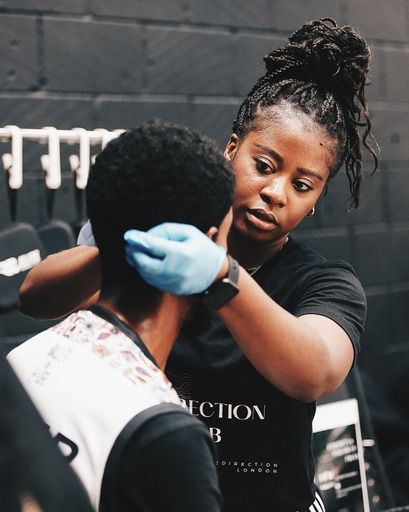 The final question put to Ruby was what she would say to a woman awake at 2am, wondering whether she can build something of her own alongside everything else. Her answer was immediate: you can do it, but it won't be easy.
"You will cry, but it will be so worth it because you will be leaving a legacy." - Ruby Ditende
Her idea of legacy is refreshingly human in scale. Not millions of customers, but the clients who message to say thank you. Measure yourself by the one person you have helped, she says, not the thousands you have not reached yet. And if it does not work out, you will still be the person who tried.
Find out more about Re-Direction Rehab, and follow Ruby's journey on Instagram and LinkedIn.
Ready to take your own first step?
Companies MadeSimple can help you register your company quickly and simply, so you can stop waiting for the perfect moment and start building.
Check out our company formation services today!
Explore here